
ISBN: 9798218711191
Here are two memories of her father by Rosann Bozzone, a neighbor and friend of editor Jim DeVoe’s in Lawrenceville, New Jersey.
Wild About Butter and Spice
"Ugh!”
I turn to look at my 84-year-old dad, who's peeking over my shoulder as I gather ingredients together for the cookies. He looks like he just ate capuzzelle, an Italian sheep's head delicacy even some of my mother's Sicilian relatives find repulsive.
"What do you mean?"
"I know you're making my favorite cookies, but I didn't know you have to make them with butter. Why do you have to make them with that stuff? Can't you use lard?"
Now I'm the one making a face.
"Daddy, are you kidding? Lard is pig fat. I can't imagine making a cookie with lard.”
"My mother used to make them with lard,”, he countered. “She was a good cook and lard is good. Besides, I'm not wild about butter."
I look at my German grandmother's recipe for pfeffernusse cookies that I inherited from my father's sister, Loretta. Handwritten and egg splattered, the well-used instructions list the many ingredients for this traditional cookie from Deutschland. Nowhere does it say to substitute lard for butter.
"What have you got against butter?" I ask as I shake a stick of the offending ingredient in question at my dad.
I know full well that my father has always hated butter. He doesn't care to know it's in his food. Doesn't like it on the table. Can't stand the thought of it. I also know the reason, but I want him to recollect why... to use his brain that is fast melting in an Alzheimer puddle. So I encourage him to retell the story that he's told me umpteen times. I hope he'll remember it this time too, just as he recalls that he doesn't like butter.
He smiles and shakes his head as if to clear it. His eyes take on the twinkle of humor that always accompanies the telling of this particular tale.
"It was 1922. I was 12. I needed to help my folks, so I got a job in the local German grocery store. Nothing fancy. Just stocking shelves and brining pickles in a barrel. One day, the shopkeeper gave me a new chore. I had to make fresh butter. Mr. Krause had an old churn that he had brought with him from Germany. It was made of wood, and it had a cover and a crank and maybe 6 or 8 wooden paddles inside. I poured the cream in the tub, closed the top, and cranked and cranked until the paddles turned as fast as I could make them and it was butter. Except, it wasn't. I don't know what I did wrong, but it didn't turn out right. Mr. Krause was so mad that I wasted all of his cream that he made me eat what I'd made until I threw up" … I wait for his next words which I know tickle his funny bone… “on him! I got fired and never ate butter again." Not waiting for my reaction to his story, he demands, "So are you going to put that stuff in my cookies?"
I am, and so I attempt to divert his attention.
"Daddy, how about you set the table and I'll call you when they're ready?"
Eager to help, he turns to get the dishes, stops, looks around in confusion and then sits down in his favorite place on the couch to read the newspaper. These days his absentmindedness is no longer surprising, just upsetting. I wonder how many pieces of my father I have to lose before his disease leaves us with no pieces at all.
Thinking of the steady downward drip of his faculties, I mash the butter and crack the eggs with more vigor than needed.
I look at Grandma Bertha's vague recipe measurements and try as always to approximate her "few" cups of flour, "pinch" of baking soda, "dollop" of molasses and "smidge" of salt. Scraping "some" lemon skin and grating "a little" orange rind is a mindless activity that calms me. I add "a cup of brown zuker", an egg, and "a turn" of ground pepper. After beating the contents of the bowl into submission, I chill the sticky dough. In 20 minutes, I roll the easier-to-handle mixture into little spheres.
My deceased mother's oven creaks as I open the door and slide the cookies inside.
An aromatic blend of cinnamon and ginger fills the room as 37 uneven dough balls brown to perfection. I remove the hot treats, wait a few minutes, roll the cooled confections in powdered sugar and allspice, and call out,
"Daddy, time for tea and cookies."
"You made cookies? I didn't know you were making cookies. Why didn't you tell me? I would have helped you."
I sigh and don't remind him that he knew.
He shuffles over to smell the cookies.
"Ah, pfeffernusse! My favorite!"
Always amazed that he can remember some things and not others, I shake my head and set two places at the table.
It's just the two of us in my parents' two room apartment that is attached to our house. The kids are still at school, my husband TJ’s at work, and my mom, who passed away three months ago, leaves an empty place around their yellow Formica table. That my father no longer remembers the love of his life is a curse and a blessing which leaves me both devastated and relieved.
I take comfort that most of the time, he remembers me.
We sit.
Except for the munching, the silence is overwhelming.
After a few slurps of tea, my dad speaks.
"Oh, Sweetheart, did you know that these are my favorite cookies? You didn't make them with butter, did you? I'm not wild about butter. Did I ever tell you the story about the time I made butter?"
As the familiar story unfolds again, I sip my tea and take a bite of buttery pfeffernusse. Too spicy for me. I reflect that although I have never enjoyed these little brown balls of butter and spice, I will continue to make them long after my dad is gone, for they will forever remind me of his love.
Legacy: Notes On the Wall
“Laurence, did you finish practicing already? I don’t hear you!”
Even though she died three weeks before I was born, I can almost hear my Grandmother Bertha Hettesheimer yelling at my dad.
“Where are you? You left your violin on the table. You need to put it back in the velvet cloth and then place it in the case. And take care of the bow!”
My father, at age five in 1915, says he always answered his mom the same way. “Yes, Mother, I just finished and I will put the violin away in a minute.”
The truth, he told me, was that he pushed the hands of the clock ahead with his bow to fool my grandmother into thinking that that he had practiced the required hour before he went out to play. I’m not sure how he pulled that off each day, but he swore he did.
Years later in a fit of nostalgia, he would attempt to play that ancient relic. We were all very glad when he wrapped it up and put it back in the closet.
There it remained until a visit from my cousin Augustine prompted its resurrection.
One of nine children of my mother’s sister Mary, Augie was a barber. Mary’s husband, my Uncle Sal who had been the first LoPrinzi to be a barber, believed that “all you kids need to work. You can do anything else in your life that you want to but learn how to be a barber and you’ll always have work.”
So all of the kids became barbers in Uncle Sal’s shop in Flemington, New Jersey. 60 years later, some of them are still barbers. One became a teacher, another an airplane pilot, and all of them were successful and had varied interests, but only Augie was responsible for the rebirth of my father’s violin.
Surreptitiously making guitars in the back room of his barber shop, Augie crafted fine guitars, violins and ukuleles. Nowadays, his guitars are world-renowned. In fact, one of his most prized possessions is a 1966 picture of the late virtuoso Andres Segovia playing one of his guitars. Mine is the memory of the joy on my dad’s face when Augie fixed his beat-up violin. It’s Ironic that Dad forgot he hated to play and from that moment on all he wanted to do was entertain us with his newly refurbished instrument’s squeaks and squawks. Augie could work miracles with the violin but could do nothing about the expertise of its owner.
My father would exclaim, “See how wonderful my new violin is?”
I miss those days when Dad would try to ply his so-called craft in between caring for my disabled mom and trying to take care of me.
Since his passing nearly 20 years ago, memories of Dad tenderly plucking the catgut strings of his violin are etched permanently in my mind.
His kindness and love toward all echo forever in the legacy of his violin…
… which lives on my wall.
Laurence James Hettesheimer (1910-2001) was born in Jersey City, New Jersey. In an effort to support his mom, younger brother and two sisters after the death of his father, Larry went to work for the Fidelity and Deposit Company of Maryland at the age of 15. Throughout his life, Larry was fond of recounting the years that he was office boy to Franklin Delano Roosevelt, who at that time served as vice-president and director of F & D. A veteran of World War II, Corporal Hettesheimer married Rose LoPresti in 1946. He returned to F & D after the war where he remained in the accounting and judicial departments until he retired after 50 years of service.
Larry loved his wife, daughter, son-in-law, grandsons, gardening, and the Yankees.
Roseann Bozzone is a retired teacher, wife, and mother. Born in Brooklyn, NY, she graduated from CUNY Brooklyn College with a degree in English Literature and Education and enjoyed postgraduate studies in English and American literature. After several years of teaching middle school in Brooklyn, she left teaching to work as an overseas consultant for American Express. She married T.J. Bozzone in 1973 and they moved to Lawrenceville, New Jersey in 1985 where she returned to teaching after the birth of her two sons.
A contributor to THE MAGIC OF MEMOIR, edited by Linda Joy Meyers and Brooke Warner, Roseann is an amateur photographer, loves ferrets and frogs, and enjoys international and local travel.
* * * * *
Denise D'Aurora, spouse of book contributor James D'Aurora, recalls the father she lost many years ago -- but whose memory still resonates.
When Absence becomes Presence
I can no longer remember my father's voice, but still he comes to me; usually in those moments just before I become fully conscious, what sleep researchers call “hypnopompic hallucinations.” Once after a surgery I told the recovery room nurse that he was in the OR waiting room. This would have been difficult as he had been dead for many years. “This happens sometimes,” she told my husband, who was the one waiting.
My father still inhabits my dreams, although less often as the years go by. He usually comes in times of great emotion. Two are especially memorable: after the May 1970 shootings at Kent State when I was in my first year of college, and now in 2026 when ICE has been occupying, terrorizing and traumatizing the Twin Cities area where I live. My father has loomed over all the years of my life, although he was only a living presence in it for less than a fifth of them.
I am the oldest of four daughters, all of us born within a span of six and a half years to our parents, David and Marilyn. I can’t be certain if the earliest memories that I have of him are really mine or a melding of my recollections and the stories that are family lore. There are memories of being carried into church, or out of it, when my childish energy and chattering were deemed “too much.” There are memories of being in the backseat of the car, before seat belts, hanging over the back of the front seat to suggest destinations: the Frost Top Root Beer Stand, Young’s Jersey Dairy, or my grandparents’ house. I know that he often took me with him on errands when I was very young, especially in the evenings after at least a couple of my sisters had been put to bed, so that my mother could have some peaceful time. I have been told that this began after the premature birth of my second sister shortly before I was two. She was very small, and colicky, needing to be held almost constantly when she finally came home from the hospital. Since my mother had yet to learn to drive, my father did the visits to the grocery, pharmacy or other stores for needed items and I went along.
The memories that I’m certain are my own start when I was about five. He was in sales, supplying hardware stores with lines of equipment in the era before the advent of chains and big box stores. His district was the small towns in our southwest quarter of Ohio, and he would make visits mid-week to take orders. By that time, I had two younger sisters, and I now realize that my mother had likely experienced her first episode of major depression. She had been hospitalized for long enough that a housekeeper/nanny had been hired and our lives reorganized. After that time, when he would leave on a Tuesday or Wednesday, my grandmother or one of my several great-aunts would come to be with her, and I would go with him on his route. I remember riding in the front seat (!) of his green Plymouth, accompanied by my doll or my books or my most favorite toy, my Viewmaster, very “old school” with its discs of pictures (but no audio) of far-away places. When we would reach a store, I would be happily ensconced on a stool under a counter and would color while he and his customers talked.
A few years later, the evening errands often ended at my paternal grandfather’s bar-restaurant when Ollie, as he was known, was doing his bookkeeping. I remember how glad my grandfather always was to see us both. There was a small bowling machine in the overflow dining room next to the office, which by evening was usually empty, and Ollie would give me an entire roll of nickels so that I could entertain myself while he and my father talked. I never used all the nickels, and the big treat was getting to take the rest of the roll home. A few years later, we would visit him and my grandmother Fanny at their house, only now it was so my father could help my grandmother settle him for the night. At that time he had been diagnosed with a form of leukemia, and had begun a long downward trajectory that would ultimately end in his death. Ollie was terrified of hospitals, and exacted a promise from my grandmother not to let him die in one. Fanny was true to her promise, and thanks to a steady stream of student nurses who lived with them and the Dominican Sisters of the Sick Poor, an order of visiting nurses, all of his nearly two years of illness was spent at home. My grandparents were not poor; on the contrary, they had donated to this Order for years. I think the nuns saw this as an opportunity to repay their generosity. My father and his older brother alternated nights helping my grandmother settle him into bed.
I have a vivid memory of the conversation my father and I had about Ollie’s illness. I overheard him one night, talking long distance to his sister, my Aunt Mary Catherine, who lived in California. More than likely, he was conveying the diagnosis to her. The word “leukemia” was known to me, because I had heard it on TV, on a commercial for a charity soliciting funds. I remembered the word “incurable” being used, and of course, I knew what that meant. Some time not long after, when he was tucking me in, I asked him, “Does Grandpa Ollie have leukemia?” I remember a flash of sadness in his eyes that he quickly covered before he said, “Yes, he does”, followed by “Do you understand what that means?” I said yes, that I did, and that was that. We didn’t talk anymore about it, but I knew that he knew that I understood. From that time on, I went with him often for the nightly ritual of moving Ollie from his big chair in the bay window of the living room to the bedroom, the big tank of oxygen trailing behind. I would usually be playing checkers with whatever student nurse was living with them at the time. And I remember our silences on the way home as tacit acknowledgement of what was to come. Ollie died the day after Fanny’s birthday, and what I remember as a gathering of most of my aunts, uncles and cousins that evening. It had been the usual chaotic type of celebration when the eight adults and sixteen children living in Springfield gathered, with my grandfather sitting in his big red chair enjoying our presence. It came as quite a shock that he died of a heart attack less than twenty-four hours later.
My father's death occurred on what would have been my grandfather’s birthday in 1964, which also happened to be Father’s Day that year. He had been having back pain ever since serving as a pallbearer at a funeral that Thursday, and had gone to the Emergency Room at around 3 AM to meet his doctor. Dr. Anderson gave him an injection into what was thought to be a muscle spasm. Later that morning, he told my mother that the best Father’s Day gift would be for her to take us all to Lakewood, our swim club, for a few hours so that he could sleep. Not long after we had arrived there, Laura and Joe Mader, our next-door neighbors, appeared at the gate. After paging our mother, they told her that his pain had worsened and he had been taken by ambulance to the ER. Joe offered to take my mother there, while Laura brought us home. When we got there, it was clear that things were not normal–all the cushions from the sofa were on the floor, and someone had clearly vomited in the powder room toilet. Uncle Herb, one of my uncles on my mother’s side, arrived to take us to my maternal grandparents’ home. When I asked if my father was OK, he looked away and quietly said “yes.” Arriving at my grandparents’ home, my mother’s face spoke the words she couldn’t quite articulate.
That evening, a manila envelope of the belongings he had with him at the hospital was lying open on the dining room table, away from the places where everyone was gathered in the kitchen and living room. I seized his watch from the contents. I think it had been the last Christmas gift he had received from Ollie and Fanny before Ollie’s death. How well I knew that watch, and how much he treasured it. I kept it next to my bed, obsessively winding it so as not to let it stop for weeks afterward. That summer, my sisters and I often spent time at various other places–the homes of friends, at either my maternal grandparents’ or at Fanny’s, and often with cousins, as everyone was concerned my mother’s grief would morph into yet another depressive episode. Several weeks after his death, I unexpectedly stayed the night at one of my cousins’ homes, and was separated from the watch for over a day. I arrived home to find that the timepiece had run down and stopped just like his heart on Father’s Day. I sobbed as if I had lost him all over again.
My mother didn’t sell my father’s car for a long time, and often when coming home from school or elsewhere, I would see that green Plymouth with its big fins and think about something I wanted to tell him, only to realize the impossibility of my desire. After my awareness of his death had become a fact of my life, I still often found myself wanting to tell him, or ask him, something. And of course, there were always dreams. One of the worst was several years after his death, when I dreamed that he had returned from the dead. We were all happy to see him, of course, but it was also as if my father’s reappearance was an inconvenience–we all had places we were supposed to be, and needed to leave him alone at the house. I felt another type of grief when I recognized how the dream revealed that we had moved forward, reconfiguring our lives without him.
I have tried to think of what his advice to me would have been at various points in my life, especially when I was making a big decision–like where to go to college, or what I was going to be “when I grew up.” Before I married my husband Jim, I had twice planned to marry someone else, and then broke those engagements. In one case, my mother was very upset by my decision, as my fiancé was from our hometown and she hoped that we would likely live there and not in some far-off place. I wished that I could have had my father’s counsel and support. And of course, at the great milestones of my life I still think of him and wish he were here: at my several graduations (high school, college, graduate school); at my wedding to Jim; at the moments when my children were born. I want to know what he would think of my choices, of the life that I have lived, of our family. I can’t help wondering if he would approve, give me his blessing.
Decades ago, the author Mitch Albom wrote a novel, “The Five People You Meet in Heaven”, in which an elderly man who dies is shown the truth of his life on earth through his encounters with five persons he meets in the afterlife. When I read it then I immediately knew that the person that I most want to see in heaven is my father. But I wonder, “What will that encounter be like? Will he be as unrecognizable to me as was Jesus to the apostles on the road to Emmaus after the Resurrection? How would I know him now–and would he know me?”
David Edward Linkenhoker was born in 1926, the youngest of five children of Aloyisuis Patrick (Ollie) and Frances Minerva (Fanny) Doster. He married Marilyn Anne Moody in November of 1950, and the first of his four daughters was born a little less than a year later. They had four daughters in six and a half years. Marilyn suffered with depression and anxiety for most of her life, beginning after the birth of her second child. David spent his entire career in sales, first as a manufacturer’s representative in the hardware industry, and finally as a life insurance underwriter for the Prudential Insurance Company. He died of a massive heart attack at age 37.
Denise (Linkenhoker) D’Aurora was born in Springfield, Ohio in 1951, the oldest of four daughters. She graduated from Catholic Central High School in 1969 and from Kent State University in 1973 with a degree in English Literature. She was in her first year when four students on the Kent State campus were killed protesting the Vietnam War. One of the murdered students was a classmate and lived in her dormitory. She also received a Master’s Degree in Counseling from KSU and met her husband, James D’Aurora who was also a student in the Counseling program there. They moved west to pursue PhD degrees at the University of Minnesota. They raised their two children, Andrew and Elizabeth, in Minneapolis and Edina. She practiced as a Psychotherapist for 40 years, retiring in 2018.
* * * * *
Margaret (Peggy) Van Dyke discovered "Fathers and Sons" on Amazon and became an enthusiastic supporter of the book. We're so pleased that she has subsequently been inspired to share these memories of her father.
Hank
Echoing that heart-rending lyric line from “Hamilton”, “Teach me how to say good-bye”, was the final lesson my father, Henry Petruska, gifted me. He modeled that at my mother’s death bed, and it radiated forward over time and space. His comment was, “I never saw such a peaceful death.” It continued the morning of her funeral as I was attempting to hurry him along. With a calm quiet he simply stated, “They aren’t going to start without me.” A gift of perspective and unexpected peace.
The final piece of that gift was the trip from the funeral home to St. Mary’s Church. This time, it was my dad’s final trip. I learned what an invisible, yet indelible, mark he left and the potential for us all. The funeral director announced we would be taking a small detour, “a nickel ride” as he termed it. My father’s very words! We traveled through the neighborhood in order to pass the house my dad grew up in, which was right next to the home he had built prior to his marriage as well as the homes of several of his siblings and his best friend. What a tribute that was and it triggered so many childhood memories of Sunday afternoon “nickel rides” with him. Six kids, eight years between oldest and youngest, crammed in a car exploring the countryside. I suspect it was a ploy so my mother could sneak in a nap!
Hank, as my father was known, graduated from high school and began working before he and a couple of his brothers served in World War II. My dad was reticent about his service and his shared words were, “I didn’t do much. I was in the Signal Corps and never saw any action. Not like my brother, Bill, who was in the infantry.” However, he left a treasure trove of souvenirs and photos. He spent time in North Africa and parts of Italy. He was very proud of his visit to the Vatican. I believe his love for travel started in those days. He was a deeply religious man whose Catholic faith was paramount in his life. He held onto his faith throughout his lifetime despite times of deep darkness. His quiet yet abiding faith remains an indelible lesson for me to this day.
As I am the oldest child, whose birth was almost despaired of (my parents were starting to consider adoption), I may have been fated to be a daddy’s girl despite having four younger sisters. However, I like to think that it was a karmic connection that began before birth. I may have been the first kid but I was quickly followed by five siblings with a mere eight years between me and the baby. Raising six children and providing a Catholic school education must have been a challenge in the 1950s.
My father worked two jobs for some of my early years: a typesetter for the local printing company by day and a lamp salesman and repairman several evenings a week. Despite those jobs he was active politically, serving as a city Alderman as well as on the Safety Board (fire and police). He was also active in our parish church. He was home most nights by bedtime with enough time to assist with homework duty – no mean task with six children. He was the “go-to” person for math. My mother, Norah, was a secondary teacher for language arts and handled the reading and writing. My mother went back to work, teaching half-days when I was seven or eight. Her sisters insisted as she was on the verge of developing full blown agoraphobia and, as one of my very outspoken aunts pointed out, one of her children was going to need braces (yeah, it was me). My parents eventually hired a helper, a wonderful Lutheran widow who cooked, cleaned, and helped the girls with catechism. By the time my youngest sister was born, my mother was teaching full-time at the junior high. We kids were lucky to have two working parents and an incredible babysitter.
I did not have a car after getting my driver’s license but became the designated chauffeur for my five siblings. It was a job my mother was overjoyed to drop. My funniest memory of my Dad and cars was the day before I was to begin the roadwork portion of Driver’s Ed. I had never been behind the wheel so my Dad (and undoubtedly my Mom as well) decided I should try to drive before class the next day. At the time the only vehicle we had was a Chevelle station wagon that drove and looked like a tank. No power steering, not that would have helped what ensued. Our driveway had a slight decline and two huge ancient maple trees quite close to the edge on each side. I can not recall how many tries it took for me to attempt to back up that tank before my Dad abandoned the cause. It was an intense experience and I still experience flashbacks as it is now my driveway.
My Dad’s retirement years (a whopping 35 years!) were amazing as the family watched him remake himself, in a way, and blossom. Initially, it must have been a challenge for him as he had never enjoyed more than two weeks of annual vacation time. My mother, younger by nine years, continued working as a junior high teacher. Two of my sisters decided that one thing my Dad could do was clean the house and proceeded to instruct him. My goodness, he was a compliant soul (especially where his daughters were concerned).
He collected a group of breakfast buddies after retirement and then created a computer buddies club. My second husband, Tom, introduced him to the wonderful world of computers and guided him to explore and build on his printing skills through graphic arts programs. They communicated daily and Tom was a frequent “guest lecturer” at the computer club meetings as well as their online problem solver. My mother once told me that she was sure that the computer had added years to my Dad’s life and how much she appreciated my husband.
One of the last things my husband arranged for my Dad was the gift of an iPad for Christmas 2013. Unfortunately, it became my job to show him the ropes as my husband died right before that Christmas. My Dad loved that iPad and was thrilled with the many apps plus the ability to FaceTime with me. It never replaced his desktop and printers, but he truly did enjoy it. My Dad was 98 years old when he received that iPad and that was when I realized that I hoped, should I make it to 98, that my mind would be that sharp and inquisitive. Yet another priceless gift from him.
I was fortunate enough to be able to spend the last year of my Dad’s life with him a great deal and nonstop the last six months. He was able to stay in his home and qualified for hospice because food did not linger long enough in his body. While initially not comfortable with the idea of hospice, but ever the accommodating father, he consented to trying it when one of my sisters and I presented the idea to him. His energy level was failing and the first day, when everyone involved in the case had to make a home visit, he looked at me afterwards and was not happy. I reassured him that was not the norm. As soon as he discovered that no more doctor visits were part of the service he was on board! He worked his magic, so to speak, and was rewarded with almost all female caregivers – his shower aide, the masseuse, and the social worker. He had a male nurse for a few months until the nurse received a transfer closer to his home. The female nurse who replaced him was a delight. All the caregivers exemplified the type of compassionate care we all hope for at the end of our lives. My Dad interacted so well with the social worker who was supposed to come only once a month that she made weekly visits and often more. He loved his weekly massages and felt much safer getting a shower. He received hospice care for a few days more than six months. He told me repeatedly that he did not understand why more people did not take advantage of this amazing service.
I was in the living room with him when he did “go home" (I truly love that phrase). I am reminded of the writer/philosopher John O’Donohue’s thoughts on what a blessing it is to be with someone at that time and also the gift of being able to say all the things in your heart. It was my watch as he had been in the final stages for four days and the family was taking turns at night to sit with him and make sure his pain meds were administered on time. I fell asleep and when the cuckoo clock woke me, he had slipped away. I am certain that it was the only time in those last four days that everyone in the house was asleep simultaneously. I know in my heart that that was what he was waiting for to occur.
My father, Hank Petruska, did indeed show me the way to say goodbye from both sides. He was a man that was open to all the wonder life could offer and was a living example of the magic of deep, true listening.
Henry “Hank” Benedict Petruska was born on September 5, 1915 in Niles, Michigan, the eighth child of an eventual ten. His parents, Coloman Petruska and Anna (Kunz) Petruska had both emigrated from Czechoslovakia. The family survived the Great Depression, helped by a huge garden and fruit trees.
Hank graduated from Niles High School in 1933 after attending St. Mary’s Parochial School. He took three years of printing classes in high school and found employment at Niles Printing Company following graduation. He left there to serve in the Army Signal Corps in South Africa during World War II from 1942 to 1945. Upon his return home, Hank resumed his job while living with his parents. He purchased the garden property adjacent to the family home to build a home for his own family.
A “ladies man”, but very particular about those ladies, Hank did not marry until after turning 33. He met his future wife, Norah Simpkin, as she stepped off the train for her first job as a teacher at Niles High School. They married on December 28, 1948 in the deep snow of St. Sault Marie, Norah’s hometown. They returned to Niles to the home they had built that year. Hank and Norah were blessed with six children, starting in 1950 and ending with a “surprise” in 1958.
Hank’s priorities were exploring life, raising children, serving the city in various roles, serving God and loving his wife beyond belief. He retired in 1980 and traveled with his beloved Norah until her death in 2003. He continued to travel and to collect new friends (indeed, “never met a stranger”) in addition to reveling in being a grandfather to seven grandchildren. Hank kept busy going to classes at Forever Learning in South Bend, Indiana as well as going to the “Y” (YMCA) and hanging out with the guys. His final days were in his home, his fervent wish, surrounded by family and friends. He left all with the gift of having known him on June 5, 2016.
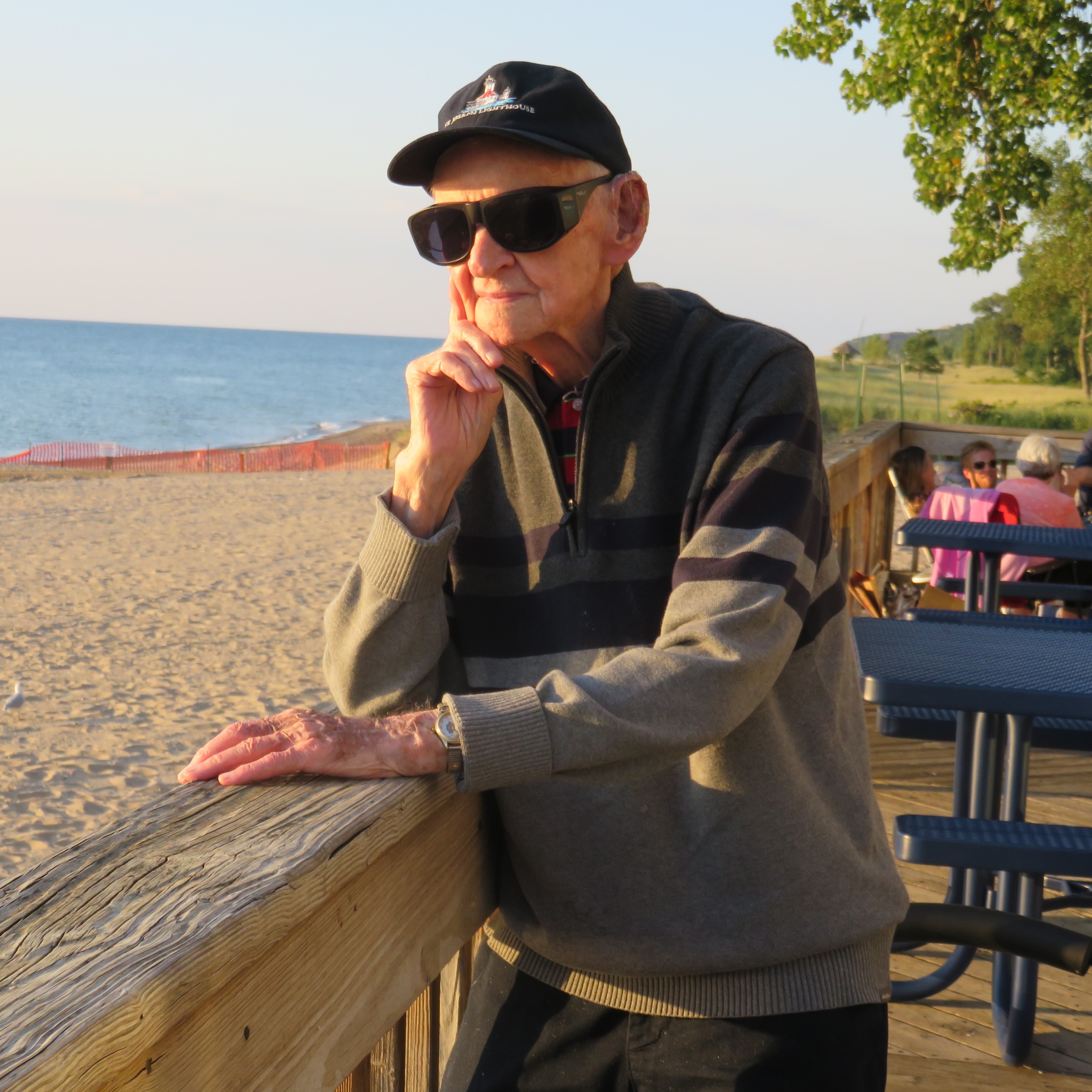
Margaret Mary (Petruska) “Peggy” Van Dyke was born in Niles, MIchigan at Pawaiting Hospital on May 11, 1950, oldest of six children (the last one a “surprise”) spread over a mere eight years. She graduated from Niles High School in 1968, Western Michigan University in 1972 with a teaching degree, and Oakland University in 1978 with a M.A. in Early Childhood Education followed by an Administrative Certificate in 1990. Her employment included long distance telephone operator in high school and college; city recreation supervisor (also in high school and college; elementary teacher for the Waterford (MI) School District from 1972 to 1980; following a layoff, the employment line from June 1980 to June 1981; Administrative Specialist for IBM from July 1981 to March 1986; and a return to the Waterford School District from March 1986 until her retirement in June 2010.
Peggy married twice, once in 1983 (divorced 1994) and again in 1995, having definitely traded up to Tom Van Dyke. She became a widow in 2013, after which she traveled a bit and then was blessed with the opportunity to help care for her father in his last year of life. Subsequently, she was surprised with the privilege of providing part time childcare for an infant grandnephew and then his sister until 2025. Having concluded that stage, Peggy is now looking forward to new adventures as well as continuing her journey as a perpetually curious life long learner and writer.